Verrerie of Biot - The art of glas blowing
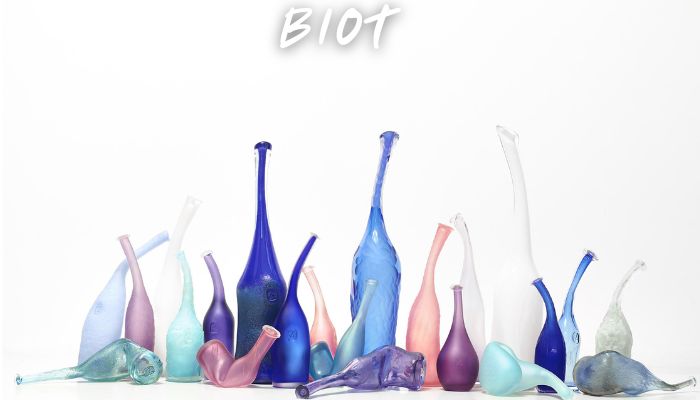
Biot — The Medieval Village of GlassBiot is one of those places on the Côte d’Azur that is easy to miss if you are concentrating on Nice, Cannes and Antibes. And that would be a shame.The medieval village sits on a green hillside between Nice and Cannes, surrounded by the countryside of the Alpes-Maritimes. From Gaia’s Villas in Théoule-sur-Mer, it is also an easy excursion by car, making it a particularly good choice for a half-day away from the beach.Biot has something that many Riviera villages have gradually lost: a very strong sense of identity. Its history is closely connected with artists, craftspeople and small workshops, and that tradition is still very much alive.The village became particularly associated with art during the twentieth century, when artists including Fernand Léger made the area their home. Today, the Musée National Fernand Léger sits just below Biot and is well worth adding to your visit if you enjoy modern art.But Biot is perhaps best known for something much more unusual: glass.
The Story of Biot Glass
Glassmaking has a long history in the South of France. Centuries ago, glassmakers were attracted to the region partly because the large pine forests provided an abundant supply of wood for their furnaces.Biot's modern glassmaking story, however, really began in 1956, with the creation of La Verrerie de Biot and its distinctive bubbled glass.The technique was developed by Éloi Monod, an artist and chemical engineer who was working with the Poterie Provençale. Instead of trying to remove bubbles from the glass, Monod turned them into part of the design.The result is the glass that has become synonymous with Biot: transparent, colourful and filled with tiny bubbles that catch the light.Special techniques allow the glassblower to control and manipulate the bubbles while the glass is still molten. It sounds simple when you describe it, but watching a master glassblower actually do it makes you appreciate how much experience is involved.Monod's invention became so successful that bubbled glass eventually became the signature of La Verrerie de Biot. Monod himself was also a much-loved local figure and served as mayor of Biot.Today, the tradition continues, with La Verrerie de Biot producing its distinctive mouth-blown bubbled glass alongside contemporary collections.
Watch the Glassblowers at Work
This is the part I would particularly recommend if you are visiting Biot with children — or simply if you have never seen glass being made.At La Verrerie de Biot, the workshop is open to visitors, so you can stand and watch the glassmakers working with the furnaces and molten glass.It is quite mesmerising. The material starts out glowing orange and almost impossibly soft, and within minutes the glassblower has transformed it into a vase, bowl, glass or another object.There is also an augmented-reality experience that explains the work of the glassmakers and the history of the glassworks.And if watching is not enough, you can actually blow your own piece of glass.
Blow Your Own Glass
La Verrerie de Biot currently offers an introductory glassblowing experience with a master glassmaker.The session takes around 20 minutes and costs €68 per person. No advance reservation is required for this introductory experience, and you can collect your finished piece from 5 pm the following day — or from Tuesday if you take part over the weekend.For anyone who wants to go further, there is also a more intensive two-day introductory course in which participants learn the tools and techniques of glassblowing and work towards creating their own piece.It is a lovely souvenir because, unlike something bought in a shop, you actually made it yourself.La Verrerie de Biot
5 Chemin des Combes
06410 Biot, France
Tel. +33 4 93 65 03 00
Email: verrerie@verreriebiot.comOpening hours are generally 10:00–19:00 in July and August, and 10:00–13:00 and 14:00–18:00 from September to June, with slightly different Sunday and public-holiday hours. The glassworks is closed on 25 December and 1 January, as well as for an annual closure in January.There is parking on site.I would still check the current opening hours before setting off, particularly if you are visiting outside the main summer season.
Les Verriales and the International Glass Scene
Biot's glass tradition is not only about its historic techniques. The village has also developed a strong connection with contemporary glass art.For many years, Les Verriales has brought together around thirty contemporary glass artists around a different theme, creating an opportunity to see how traditional glassmaking can be pushed in completely new directions.The exhibition has also helped younger artists gain visibility alongside established names.And if you are visiting in September 2026, there is an especially good reason to put Biot on your list.
Biot International Glass Festival — BIG 2026
From 18 to 20 September 2026, Biot will host the fifth edition of the Biot International Glass Festival (BIG).The festival brings glass artists and master glassmakers from around the world to the village, with live demonstrations, exhibitions, workshops, performances and opportunities to see the glassmakers working with molten glass.The 2026 edition will feature almost 200 glassmakers from five continents, with Danish artist Tobias Møhl and French artist Juliette Leperlier as guests of honour.There will also be exhibitions and demonstrations throughout the village, making this an unusually good time to visit Biot if you are interested in glass and contemporary craft.The previous edition attracted more than 18,000 visitors, so this is becoming a significant event on the Riviera's cultural calendar.
Don't Just Visit for the Glass
Once you have seen the glassworks, take some time to explore Biot itself.The old village is compact enough to explore on foot, with narrow medieval streets, stone buildings, small squares, galleries and artists' studios tucked into the village.It is not a place where you need a strict itinerary. Wander through the little streets, stop for a coffee, look into the galleries and enjoy the views across the surrounding countryside.If you are interested in modern art, make time for the Musée National Fernand Léger, located just below the village. Léger spent considerable time in the region, and the museum houses a remarkable collection of his colourful and distinctive work.Combining the museum with the glassworks makes a particularly nice day for anyone interested in art and craftsmanship.
Why I Recommend Biot
For me, Biot is a lovely change of pace from the glamorous coastal towns.You can spend the morning swimming in Théoule, drive into the hills for lunch and an afternoon in the village, watch a glassblower at work and perhaps come home with a handmade piece of Biot glass.It is also an excellent option on a day when the weather is not perfect for the beach.And if you are travelling with children, the glassblowing experience is something they are likely to remember long after the holiday is over. There is something very satisfying about watching a craftsman create something from almost nothing — and even better when you get to take your own creation home.From Gaia’s Villas: approximately 20–30 minutes by car, depending on traffic.My tip: If you want to watch the glassblowers and perhaps make your own piece, check the current opening times before leaving and allow at least half a day for Biot. Don't rush back to the coast — the village deserves a little time to explore.