Saint-Paul-de-Vence, France : un village médiéval où se rencontrent art, histoire et charme provençal
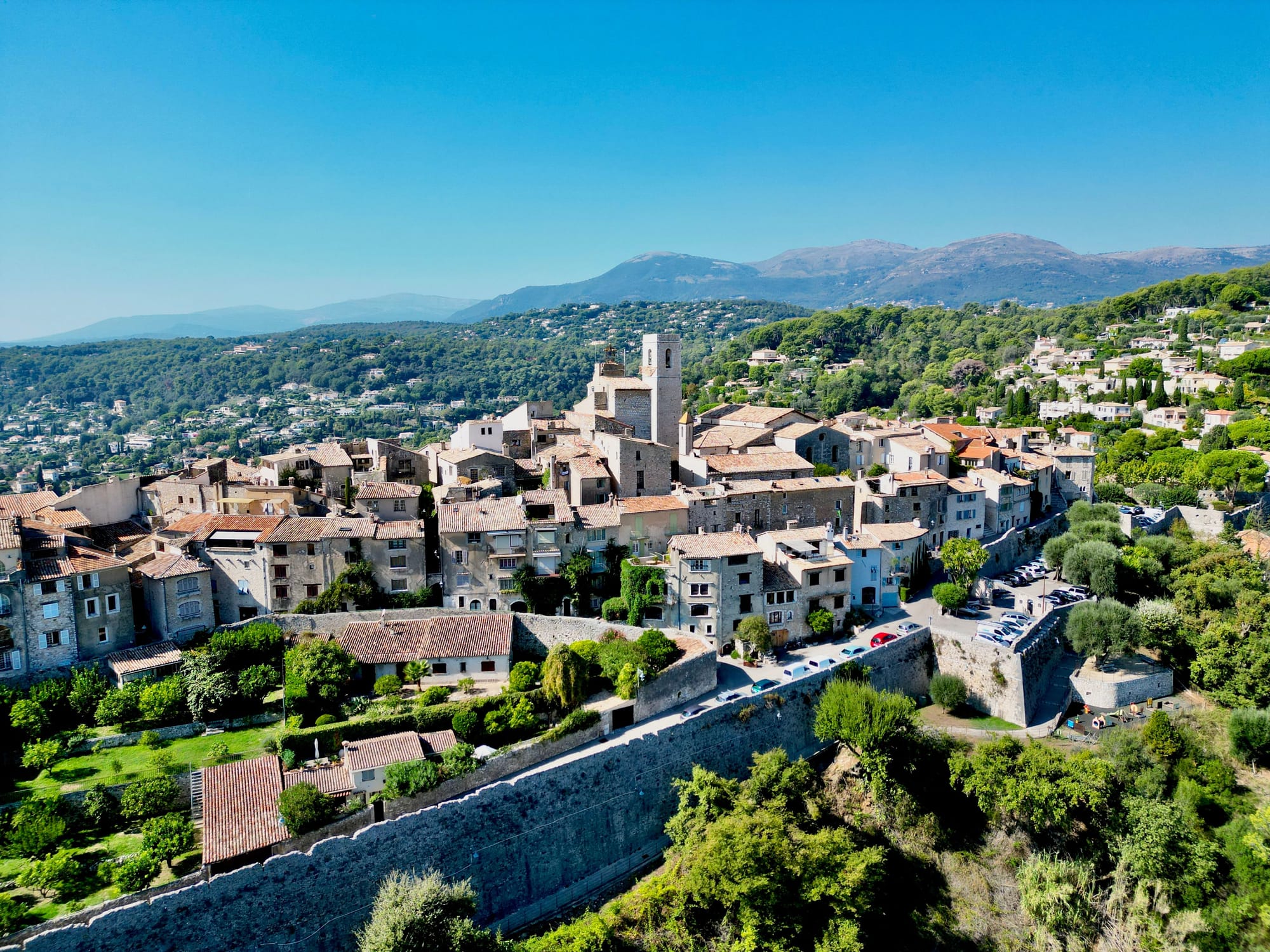
Discover Saint-Paul-de-Vence, one of the most enchanting medieval villages on the French Riviera. Wander through its cobbled streets, explore fascinating art galleries, admire historic ramparts and visit the world-renowned Fondation Maeght. From the legendary Colombe d'Or to the artistic legacy of Marc Chagall, this beautiful Provençal village offers a wonderful blend of history, culture and Mediterranean charm. An unforgettable day trip from Théoule-sur-Mer.
If you are planning to explore the French Riviera, our two private, family-owned holiday homes in Théoule-sur-Mer make a wonderful base. Discover Villa La Cigale, our authentic Provençal villa overlooking the Mediterranean, or Villa La Cigalette, an intimate seaside retreat with its own private pool and garden.
A Village with More Than a Thousand Years of History
Saint-Paul-de-Vence has a history stretching back many centuries. Its elevated position made it a naturally strategic settlement, and during the Middle Ages the village developed into a fortified stronghold. Its importance grew considerably under King Francis I, who ordered the construction of substantial defensive walls in the 16th century. These fortifications helped protect the village and remain among its most impressive features today. Unlike many historic settlements that have been extensively modernised, Saint-Paul-de-Vence has retained much of its medieval character. The old stone buildings, narrow lanes and fortified gateways create an atmosphere that feels wonderfully removed from the busy coastal towns below. The village is compact, and much of its charm lies in simply exploring on foot. There is no need for a strict itinerary: almost every street seems to reveal another beautiful detail, whether it is an old doorway, a colourful window, a tiny fountain or a view across the surrounding countryside.
Entering the Medieval Village
The best way to discover Saint-Paul-de-Vence is to enter through one of its historic gateways and allow yourself to get pleasantly lost. The main street, Rue Grande, runs through the heart of the village. Along it, and in the smaller streets branching away from it, you will find art galleries, independent boutiques, workshops, cafés and restaurants. Some galleries specialise in contemporary painting and sculpture, while others display ceramics, photography, jewellery and traditional Provençal crafts. Even if you are not planning to buy anything, browsing is part of the experience. Look beyond the shop windows, too. The village is full of architectural details: old stone façades, carved lintels, wooden shutters, climbing plants and small courtyards that seem to have changed very little over the centuries. One of the pleasures of Saint-Paul-de-Vence is that it never feels like a museum. People still live and work here, and the village has a lively atmosphere throughout the year.
The Colombe d'Or: Where Artists Left Their Mark
This legendary hotel and restaurant is one of the most famous establishments on the French Riviera, and its history is inseparable from the village's artistic identity. Few places are as closely associated with Saint-Paul-de-Vence as La Colombe d'Or. Originally opened as a modest inn in the 1920s, it became a favourite meeting place for artists and creative figures who were drawn to the region. Among its celebrated guests were Pablo Picasso, Henri Matisse, Marc Chagall and Fernand Léger. The story of the hotel is closely connected to the artistic life of the village. In the early days, artists who could not always afford to pay for their meals sometimes exchanged paintings or works of art for accommodation and food. Over time, these works became part of the establishment's extraordinary collection. Today, La Colombe d'Or is renowned for its remarkable collection of modern art, displayed within the hotel and restaurant. It is a rare place where the worlds of fine art, history and traditional French hospitality come together. Its restaurant is particularly popular, with a beautiful terrace and an atmosphere that feels timeless. Reservations are advisable, especially during the busy summer months. Even if you do not dine here, La Colombe d'Or remains an important part of the village's story and its enduring artistic identity.
The Artistic Soul of Saint-Paul-de-Vence
The village's reputation as an artistic destination is no coincidence. During the 20th century, Saint-Paul-de-Vence became a magnet for painters, sculptors, writers and intellectuals. The light of Provence, the surrounding landscape and the relaxed rhythm of life provided inspiration for generations of artists. Some came for a short visit and stayed; others returned year after year. The presence of galleries throughout the village reflects this heritage. You can discover works by established artists alongside contemporary creators, with exhibitions ranging from traditional Provençal subjects to modern and experimental art. For visitors interested in the cultural side of the French Riviera, Saint-Paul-de-Vence offers something quite different from the glamour of Cannes or the bustle of Nice. Its artistic character feels deeply rooted in the village itself.
Fondation Maeght: One of Europe's Great Modern Art Collections
Just outside the village, surrounded by pine trees and Mediterranean vegetation, lies the Fondation Maeght, one of Europe's most important private foundations devoted to modern and contemporary art. Created by art dealers and collectors Marguerite and Aimé Maeght, the foundation opened in 1964. Their vision was to create a place where art, architecture and nature could exist together. The building was designed by the Catalan architect Josep Lluís Sert, with contributions from several major artists. The result is not simply a gallery but an integrated artistic environment, where sculpture gardens, courtyards, terraces and exhibition spaces form part of the experience. The collection includes works by artists such as Joan Miró, Marc Chagall, Georges Braque and Alberto Giacometti. The sculpture garden is particularly memorable, with monumental works displayed among the trees and open spaces. One of its best-known features is the Miró Labyrinth, an outdoor collection of sculptures and ceramics set within the landscape. The Fondation Maeght regularly hosts temporary exhibitions, so there is often something new to discover. It is well worth checking the current programme and opening arrangements before visiting. Even for those who are not passionate art enthusiasts, the combination of architecture, sculpture and beautiful surroundings makes this a very special place.
Practical information:
- Address: 623 Chemin des Gardettes, 06570 Saint-Paul-de-Vence.
- Opening hours: Generally 10 am–6 pm throughout the year, extending to 7 pm in July and August.
- Admission: Check the official website for current ticket prices and temporary exhibition arrangements.
- Parking: Free parking is available.
- Children under 16: Free admission under the current published tariff.
- Dogs: Not permitted inside the foundation.
The foundation is generally open every day, but temporary exhibition installations can affect access to individual galleries. It is always worth checking before setting off. Official website: https://www.fondation-maeght.com/
The Chapelle des Pénitents Blancs: Discover the World of Jean-Michel Folon
Another remarkable artistic treasure is the Chapelle des Pénitents Blancs, also known as the Folon Chapel. The chapel was decorated by Belgian artist Jean-Michel Folon, who created a series of colourful works for its interior. His designs include stained glass, paintings, mosaics and sculptures, transforming the small historic building into a harmonious work of art. The atmosphere is quite different from the grand galleries and sculpture gardens nearby. It is intimate, peaceful and full of colour, offering a lovely contrast to the stone streets outside. The chapel is a reminder that Saint-Paul-de-Vence's artistic heritage extends beyond celebrated names and major institutions. Art is woven into the fabric of the village itself.
The Collegiate Church and the Village Ramparts
The Collégiale de la Conversion de Saint-Paul is another important stop during a walk through the village. Dating largely from the 14th century, the church combines several architectural styles and contains a number of interesting religious artworks and historic features. Its calm interior offers a welcome moment of quiet away from the busier streets. Afterwards, take time to walk along the village ramparts. Built to defend Saint-Paul-de-Vence, these impressive fortifications offer beautiful views across the surrounding countryside towards the Mediterranean. On a clear day, the landscape is particularly striking: green hills, wooded slopes, distant villages and the blue sea beyond. The ramparts are also an excellent place to appreciate the village's hilltop position and understand why it was such an important defensive settlement.
Marc Chagall and the Village's Artistic Legacy
One of the artists most closely associated with Saint-Paul-de-Vence was Marc Chagall. The Russian-born painter settled in the South of France in the later part of his life and spent many years in the region. He was captivated by its light, colours and landscapes, and the area became an important source of inspiration. Chagall is buried in the village cemetery, a peaceful place that offers a quiet moment of reflection. His grave is visited by admirers from around the world, many of whom come to pay their respects to one of the great artists of the 20th century. It is a modest and tranquil setting, quite different from the busy galleries and restaurants, and a fitting reminder of the deep connection between the artist and the village.
Art Galleries, Workshops and Beautiful Little Shops
Saint-Paul-de-Vence is not a place to rush through. Part of its appeal is the simple pleasure of spending a few hours wandering, stopping for a coffee, looking into galleries or enjoying lunch beneath the shade of an old tree. The village has a good selection of restaurants and cafés, from elegant dining establishments to more relaxed places where you can enjoy Provençal dishes and a glass of local wine. You will also find boutiques selling regional products, handmade crafts, art books and souvenirs. It is worth taking a little time to explore the smaller lanes away from Rue Grande, where the atmosphere is often quieter. For photography enthusiasts, there is no shortage of beautiful subjects: stone archways, colourful shutters, flowers spilling over old walls and panoramic views from the ramparts.
When Is the Best Time to Visit Saint-Paul-de-Vence?
Saint-Paul-de-Vence is beautiful throughout the year, but the experience can vary considerably depending on the season.
Spring (April–June) is one of the loveliest times to visit. Flowers brighten the village streets, the surrounding countryside is green and temperatures are generally pleasant for exploring on foot.
Summer (July–August) is the busiest period, with visitors arriving from all over the world. The village is lively, galleries are active and restaurants are full of atmosphere. However, the narrow streets can become crowded, particularly around midday. Arriving early in the morning or later in the afternoon is advisable.
Autumn (September–October) offers softer light, comfortable temperatures and a more relaxed pace. It is an excellent time for combining a village visit with a leisurely lunch or a trip into the surrounding countryside.
Winter (November–March) is quieter and has its own charm. Although some establishments may have reduced opening hours, the village's historic streets and architecture remain well worth discovering.
How to Get to Saint-Paul-de-Vence from Théoule-sur-Mer
Saint-Paul-de-Vence is an excellent day trip from our villas in Théoule-sur-Mer. The village is approximately 45–50 kilometres from Théoule-sur-Mer, depending on the route. By car, the journey generally takes around 50 minutes to an hour, although traffic can affect travel times, particularly in summer. A car is the easiest way to visit, especially if you would also like to explore the surrounding countryside. The historic centre is pedestrianised, so visitors should use the designated car parks outside the village. From there, it is a short walk to the entrance. If you are visiting during the high season, arriving earlier in the day will make parking and exploring considerably more pleasant.
How Much Time Should You Spend in Saint-Paul-de-Vence?
Allow at least half a day to enjoy Saint-Paul-de-Vence without rushing. Two to three hours is enough to explore the old village, browse its galleries, visit the church and walk along the ramparts. If you would like to visit the Fondation Maeght as well, plan for a longer stay. For a particularly enjoyable day, combine a morning at the Fondation Maeght with lunch in the village and an afternoon spent exploring its streets and galleries. There is no need to see everything. Saint-Paul-de-Vence is one of those places where the atmosphere is just as important as the individual sights.
Why Saint-Paul-de-Vence Is Worth Visiting
Saint-Paul-de-Vence is much more than a picturesque medieval village. It is a place where centuries of history meet a remarkable artistic legacy, where ancient fortifications coexist with contemporary galleries and where the Provençal way of life can still be enjoyed at a gentle pace. Whether you come for the art, the architecture, the views or simply the pleasure of wandering through beautiful old streets, it is an unforgettable stop on the French Riviera. And after a day exploring hilltop villages and galleries, there is something rather wonderful about returning to the coast. For guests staying at Gaia's Villas in Théoule-sur-Mer, it is an excursion well worth making.
A little medieval magic, a remarkable artistic heritage and a generous helping of Provençal charm – Saint-Paul-de-Vence is one of those places that stays with you long after you have left.