Saint-Paul-de-Vence, France: A Medieval Village Where Art, History and Provençal Charm Meet
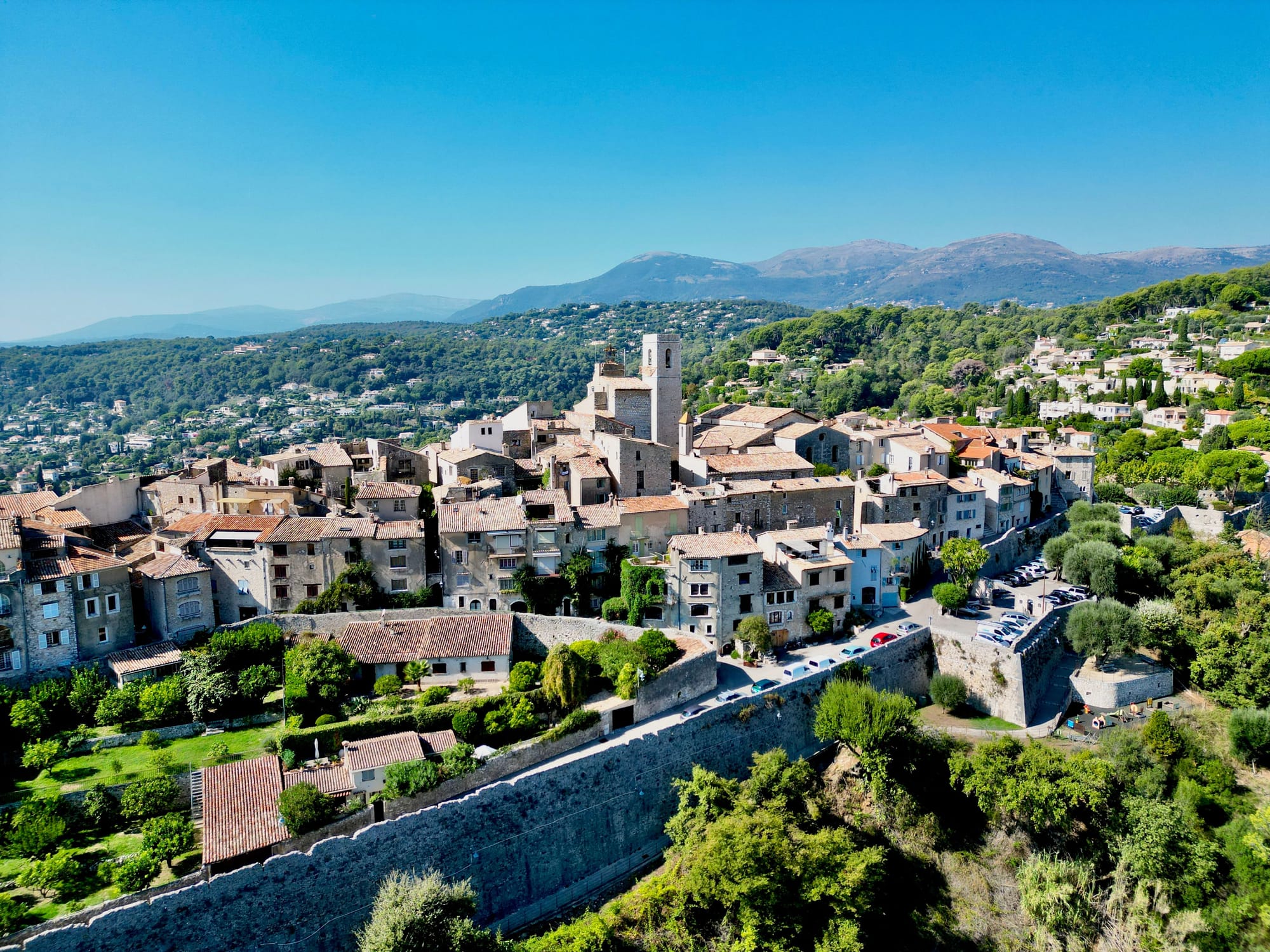
Discover Saint-Paul-de-Vence, one of the most enchanting medieval villages on the French Riviera. Wander through its cobbled streets, explore fascinating art galleries, admire historic ramparts and visit the world-renowned Fondation Maeght. From the legendary Colombe d'Or to the artistic legacy of Marc Chagall, this beautiful Provençal village offers a wonderful blend of history, culture and Mediterranean charm. An unforgettable day trip from Théoule-sur-Mer.
If you are planning to explore the French Riviera, our two private, family-owned holiday homes in Théoule-sur-Mer make a wonderful base. Discover Villa La Cigale, our authentic Provençal villa overlooking the Mediterranean, or Villa La Cigalette, an intimate seaside retreat with its own private pool and garden.
There are places on the French Riviera that are beautiful because of their landscapes, others because of their architecture, and some because of the extraordinary people who have passed through them. Saint-Paul-de-Vence is all three. Perched on a hilltop between the Mediterranean coast and the foothills of the southern Alps, this enchanting medieval village is one of the most celebrated destinations in Provence. Its ancient stone ramparts, narrow cobbled streets, flower-covered façades and picturesque squares have attracted painters, sculptors, writers, actors and art lovers for generations. Walking through Saint-Paul-de-Vence feels a little like stepping into another time. Sunlight falls across honey-coloured stone buildings, small fountains provide a gentle soundtrack to the village, and every second street seems to reveal another art gallery, sculpture or charming little courtyard. Yet Saint-Paul-de-Vence is much more than a pretty medieval village. It has a fascinating history dating back more than a thousand years, an extraordinary artistic heritage, one of Europe's most important modern art foundations and a legendary restaurant whose walls are filled with works by some of the greatest artists of the 20th century. It is also a place where the traditional Provençal way of life remains wonderfully visible: locals gathering beneath the plane trees, friends playing pétanque, cafés spilling onto little squares and visitors taking their time over a long lunch. Whether you love art and architecture, enjoy exploring historic villages or simply want to experience another side of the French Riviera, Saint-Paul-de-Vence makes a wonderful day trip from Théoule-sur-Mer.
A Village with More Than a Thousand Years of History
The history of Saint-Paul-de-Vence stretches back well before the arrival of the artists and visitors who made it famous. The surrounding territory was already inhabited during Antiquity, and archaeological discoveries have revealed traces of earlier settlements. The first known written reference to Saint-Paul dates from 1016, when the settlement appeared in a document associated with the Abbey of Lérins. During the Middle Ages, Saint-Paul developed into a fortified settlement, strategically positioned on a rocky hill overlooking the surrounding countryside. Its elevated position offered natural protection and made it an important defensive stronghold in a region where territorial boundaries and political allegiances frequently changed. The village grew around its church and castle, gradually developing the network of narrow streets and stone houses that still define its historic centre today. Its strategic importance increased considerably during the 16th century. In 1538, following the political and military tensions of the period, King François I ordered the construction of new fortifications. The impressive bastioned ramparts that surround the village today were built as part of this defensive system. Remarkably, much of these fortifications has survived intact. Walking around the village walls, you can still appreciate the scale and solidity of the defensive architecture. The fortified gateways, stone bastions and elevated viewpoints offer a glimpse into a time when Saint-Paul was far more than a picturesque destination: it was an important military position overlooking the region. Today, these same ramparts provide some of the most beautiful panoramic views in the village, stretching across the countryside towards the Mediterranean. Saint-Paul-de-Vence eventually lost its military importance, but its historic character remained remarkably well preserved. Its medieval streets, old houses, fountains and squares gradually became part of the attraction that would draw artists and visitors from across Europe. The official heritage inventory of the Provence-Alpes-Côte d'Azur region provides an interesting account of the village's historical development.
Entering the Medieval Village
The best way to discover Saint-Paul-de-Vence is on foot, without a strict itinerary. The historic centre is entirely pedestrianised, and its compact layout makes it particularly enjoyable to explore. You can wander through the narrow streets, follow the old ramparts, stop for a coffee or simply take a moment to admire the beautiful details of the architecture. Begin at Place du Général de Gaulle, the main square just below the village entrance. This is one of the most atmospheric spots in Saint-Paul-de-Vence. Beneath the shade of magnificent century-old plane trees, you will find the famous pétanque court, where locals and visitors gather for a game of boules. The square has a particularly interesting connection with the village's artistic past. Actors Yves Montand and Lino Ventura were both known for their enthusiasm for pétanque, and games here became part of the village's cultural identity. Even today, there is something wonderfully timeless about watching a group of players concentrate on a game while the surrounding cafés fill with people enjoying the sunshine. From here, walk towards the Porte de Vence, the impressive fortified entrance to the medieval village. As you pass through the gateway, take a moment to look at the defensive architecture. The entrance is protected by a medieval tower dating from the 14th century, while the surrounding fortifications reflect the later military works commissioned by François I. Beyond the gate, the village opens into a delightful maze of cobbled lanes, little squares and stone buildings. The first impression is often one of extraordinary charm. Wooden shutters, climbing plants, colourful flowers and traditional façades create the atmosphere that makes Provence so special. But don't rush. Some of the most interesting details are easy to miss if you simply follow the main street. Look for old doorways, carved stone lintels, small fountains and unexpected views through narrow passages. Many buildings have centuries of history behind them, and the village's heritage is revealed gradually as you explore.
Rue Grande: The Heart of Saint-Paul-de-Vence
The main street, Rue Grande, runs through the centre of the village and is the natural starting point for exploring its galleries, boutiques and historic buildings. It is also one of the most picturesque streets on the French Riviera. Along its length, you will find art galleries, painters' studios, sculpture exhibitions, antique shops, boutiques and small establishments selling local crafts. Some galleries specialise in contemporary art, while others display traditional Provençal paintings, ceramics and decorative objects. The variety is part of the attraction. One moment you may find yourself admiring a striking modern sculpture; the next, you are looking at an intimate painting of the surrounding countryside. Saint-Paul-de-Vence has long understood the relationship between art and everyday life. Here, art is not confined to museums or formal exhibition spaces. It is woven into the village itself. The street also offers some wonderful architectural details. Look out for the traditional stone houses, their old windows and the little passages leading into hidden courtyards. A particularly pleasant way to explore is to visit a few galleries, stop for a drink and allow yourself to get slightly lost. You will almost certainly discover something you would never have found by following a checklist.
Place de la Grande Fontaine: A Little Piece of Old Provence
One of the most charming places in the village is Place de la Grande Fontaine. Located near the centre of the historic streets, this beautiful square was once the village's main marketplace. Its impressive fountain dates from the 17th century and remains one of the most recognisable features of Saint-Paul-de-Vence. The sound of flowing water creates a wonderfully peaceful atmosphere, particularly during the warmer months when the surrounding stone buildings offer welcome shade. Look carefully and you will notice the old vaulted washhouse beside the square. This was where local women once gathered to wash clothes, an everyday activity that formed an important part of village life long before tourism transformed the region. Today, the square is a favourite stopping point for visitors exploring the village. It is also a lovely place to pause and enjoy the atmosphere of old Provence: the sound of water, the warm stone, the little cafés and the gentle rhythm of village life.
The Colombe d'Or: Where Artists Left Their Mark
No visit to Saint-Paul-de-Vence would be complete without discovering the story of La Colombe d'Or. This legendary hotel and restaurant is one of the most famous establishments on the French Riviera, and its history is inseparable from the village's artistic identity. The story began in 1920, when Paul Roux and his wife Baptistine opened a modest café-bar in the village. It gradually developed into an inn and restaurant, becoming a meeting place for artists, writers and other creative personalities who were increasingly drawn to the area. During the 1920s, 1930s and post-war years, Saint-Paul-de-Vence became an important destination for artists seeking the light, colours and atmosphere of the South of France. Among the many celebrated names associated with La Colombe d'Or are Pablo Picasso, Henri Matisse, Marc Chagall, Georges Braque, Fernand Léger and Joan Miró. The establishment became famous for its informal atmosphere and its relationship with the artists who visited. In some cases, artists paid for meals and accommodation with their works. Rather than simply receiving cash, Paul Roux accepted paintings and other pieces of art, gradually building an extraordinary collection. Today, the restaurant is renowned for its remarkable collection of original artworks displayed throughout its interiors.It is a rather extraordinary experience to sit down for lunch surrounded by paintings and sculptures by some of the greatest artists of the 20th century. The collection is not presented as a conventional museum exhibition. The works are part of the atmosphere of the establishment, displayed in the dining rooms and common areas. La Colombe d'Or also has a beautiful outdoor terrace and garden, making it a particularly appealing place for a long Provençal lunch. It is important to remember that this is a working hotel and restaurant, not a public art gallery. Reservations are essential if you wish to dine here, particularly during the summer season. Even if you do not plan to eat there, the Colombe d'Or remains an important part of the village's history and one of the most fascinating stories behind Saint-Paul-de-Vence's artistic reputation.
The Artistic Soul of Saint-Paul-de-Vence
Art has been part of Saint-Paul-de-Vence's identity for almost a century. The village's extraordinary light, the colours of the surrounding landscape and the relaxed atmosphere of the French Riviera attracted artists from France and abroad, particularly during the first half of the 20th century. Painters, sculptors, writers and intellectuals found inspiration here, and many returned year after year. Among the most important artistic figures associated with the village is Marc Chagall, the Russian-born artist who spent the final years of his life in Saint-Paul-de-Vence. Chagall lived in the village from 1966 until his death in 1985. He was deeply attached to the region, and the Mediterranean light and landscape became an important part of his later life. His grave can be found in the village cemetery, a peaceful and particularly atmospheric place beneath ancient cypress trees. Other celebrated figures associated with Saint-Paul-de-Vence include Yves Montand, Simone Signoret, James Baldwin and numerous artists, writers and actors who found inspiration or a home in the region. The village's artistic reputation continues today. Its galleries and studios showcase established and emerging artists, while the surrounding countryside is home to several important cultural institutions. For art lovers, Saint-Paul-de-Vence is much more than a beautiful place to visit. It is a destination with a genuine artistic heritage.
Fondation Maeght: One of Europe's Great Modern Art Collections
Just outside the medieval village, surrounded by pine trees and Mediterranean vegetation, stands one of the most remarkable cultural institutions on the French Riviera: the Fondation Maeght. Even if you are not particularly interested in modern art, this is a place worth visiting. The foundation was created by art dealers and collectors Aimé and Marguerite Maeght, who wanted to establish a space where modern and contemporary art could be experienced in a setting that brought architecture, sculpture and nature together. It opened in 1964 and was designed in collaboration with the Catalan architect Josep Lluís Sert. The project was conceived as something quite different from a traditional museum. Rather than simply displaying paintings inside conventional galleries, the foundation was designed as an integrated artistic environment. Leading artists of the time were personally involved in the project, contributing works and helping shape the spaces in which their art would be presented. The result is an extraordinary combination of architecture, gardens, courtyards, terraces and exhibition spaces. The permanent collection includes works by some of the most influential artists of the 20th century, including:
- Joan Miró, known for his imaginative, colourful and often playful visual language.
- Alberto Giacometti, whose elongated human figures are among the most recognisable sculptures of modern art.
- Marc Chagall, celebrated for his dreamlike compositions and distinctive use of colour.
- Alexander Calder, whose kinetic sculptures and mobiles transformed the relationship between art and movement.
- Georges Braque, one of the pioneers of Cubism.
- Fernand Léger, known for his bold forms and industrial-inspired imagery.
One of the most fascinating aspects of the Fondation Maeght is the way its outdoor spaces interact with the artworks. The gardens are home to monumental sculptures, and visitors move between indoor galleries and open-air installations surrounded by pine trees and Mediterranean vegetation. The famous Miró Labyrinth is particularly memorable. It brings together sculptures, ceramics and other works by the Spanish artist in a landscape designed to encourage exploration. The architecture itself is also worth appreciating. Light, space and the relationship between buildings and nature were central to Sert's vision, and the result remains remarkably contemporary despite dating back to the 1960s.The foundation holds a collection of approximately 13,000 works, although only a selection is displayed at any given time. Temporary exhibitions regularly introduce new perspectives on modern and contemporary art. Allow at least 90 minutes for a visit, although art enthusiasts could easily spend considerably longer.
Practical information:
- Address: 623 Chemin des Gardettes, 06570 Saint-Paul-de-Vence.
- Opening hours: Generally 10 am–6 pm throughout the year, extending to 7 pm in July and August.
- Admission: Check the official website for current ticket prices and temporary exhibition arrangements.
- Parking: Free parking is available.
- Children under 16: Free admission under the current published tariff.
- Dogs: Not permitted inside the foundation.
The foundation is generally open every day, but temporary exhibition installations can affect access to individual galleries. It is always worth checking before setting off. Official website: https://www.fondation-maeght.com/
The Chapelle des Pénitents Blancs: Discover the World of Jean-Michel Folon
Back inside the village, another cultural highlight awaits. The Chapelle des Pénitents Blancs, also known as the Folon Chapel, is one of Saint-Paul-de-Vence's most beautiful and unexpected artistic treasures. The chapel dates back to the 17th century and was originally associated with the Brotherhood of the White Penitents, a religious organisation involved in charitable and community activities. Its interior was later transformed through the artistic vision of Belgian artist Jean-Michel Folon, who maintained a particularly close relationship with Saint-Paul-de-Vence. Folon is known for his poetic imagery, delicate colours and evocative representations of human figures, landscapes and everyday life. His work in the chapel brings together stained glass, mosaics, sculptures, paintings and architectural elements, creating an environment that feels both spiritual and deeply artistic. Light plays an essential role in the design. The stained-glass windows introduce beautiful colours into the interior, while the carefully arranged artworks create a sense of harmony and contemplation. The result is not simply a decorated historic chapel, but a complete artistic environment. It is a wonderful contrast to the galleries and boutiques outside, offering a quieter and more intimate experience. Even visitors who are not particularly interested in religious art will appreciate the chapel's atmosphere and the sensitivity of Folon's work.
The Collegiate Church and the Historic Heart of the Village
Continue towards the highest part of the village and you will reach Place de l'Église, home to the Collegiate Church of the Conversion of Saint Paul. The church is one of the village's most important historic monuments and reflects several centuries of architectural development. Its origins date back to the medieval period, with construction and alterations taking place between the 14th and 16th centuries .Inside, you will find a combination of architectural styles, religious artworks and historical features that reveal the village's long religious heritage. The atmosphere is peaceful and quite different from the busy streets outside. Nearby stands the former medieval castle, whose keep now forms part of the village town hall. This is one of the oldest and most historically significant parts of Saint-Paul-de-Vence. The location also offers lovely views across the surrounding countryside. Take your time to explore the square and the neighbouring lanes. The church, castle and surrounding houses together form the historic heart of the village.
The Ramparts and the Village Cemetery: Beautiful Views and a Moving Tribute to Marc Chagall
One of the most rewarding experiences in Saint-Paul-de-Vence is to walk along the old ramparts. The fortified walls offer wonderful views over the surrounding landscape, with olive groves, vineyards, wooded hills and the distant Mediterranean creating a typically Provençal panorama. The best way to appreciate the fortifications is to follow the route around the village, taking in the different viewpoints and gateways. One particularly interesting stop is the Porte de Nice, another historic entrance to the fortified settlement. Close to this gate is the village cemetery, a peaceful place that is especially significant because it is the final resting place of Marc Chagall. The artist is buried beneath the shade of ancient cypress trees, alongside his wife Vava and other family members. Chagall spent almost two decades in Saint-Paul-de-Vence, and the village became his home during the final chapter of his life. His grave is simple and understated, in keeping with the quiet atmosphere of the cemetery. Visitors often leave small stones on the grave, following a Jewish tradition of remembrance. It is a touching place to pause, particularly if you have already explored the artistic heritage of the village and visited the Fondation Maeght. The cemetery also offers another perspective on Saint-Paul-de-Vence: beyond its galleries, boutiques and restaurants, this is a real village with generations of history and personal stories.
Art Galleries, Workshops and Beautiful Little Shops
One of the pleasures of visiting Saint-Paul-de-Vence is discovering its many independent galleries and artisan shops. Art is everywhere, but the village has never been limited to one particular style or movement. You will find contemporary paintings, sculpture, photography, ceramics, jewellery and decorative objects, often displayed in beautifully restored historic buildings. Some galleries focus on established artists, while others offer opportunities to discover emerging talent. There are also shops selling Provençal products, regional specialities, handmade objects and carefully selected gifts. It is worth remembering that many of these establishments are small, independent businesses. Their opening hours can vary according to the season, and some may close during quieter periods. Rather than treating the galleries as a shopping exercise, think of them as part of the village experience. Even if you do not intend to buy anything, browsing the exhibitions provides an interesting insight into the artistic culture that has shaped Saint-Paul-de-Vence. And who knows? You might find the perfect painting or sculpture to take home as a lasting reminder of your visit.
Enjoying the Provençal Atmosphere: Cafés, Terraces and Long Lunches
After exploring the village's history and artistic treasures, it is time to do what the French Riviera does particularly well: slow down and enjoy a good meal. Saint-Paul-de-Vence has an excellent selection of restaurants, cafés and terraces, ranging from traditional Provençal establishments to more sophisticated dining experiences. The village is particularly lovely around lunchtime, when the streets fill with visitors and the terraces become lively. For a memorable gastronomic experience, La Colombe d'Or remains the legendary address, with its extraordinary artistic heritage and elegant atmosphere. However, there are many other places to enjoy a meal, a glass of wine or a simple coffee. Look for terraces tucked into little squares or establishments overlooking the surrounding countryside. Depending on the season, you may find menus featuring Mediterranean fish, Provençal vegetables, local olive oil, fresh herbs and regional specialities .If you prefer something less formal, a leisurely coffee or an aperitif beneath the plane trees at Place du Général de Gaulle is an excellent way to experience the village. And don't forget to leave time for a little wandering afterwards. Some of the most beautiful corners of Saint-Paul-de-Vence are at their best in the late afternoon, when the sunlight softens and the stone façades take on a warm golden colour.
Beyond the Ramparts: Discover the Surrounding Countryside
Although most visitors concentrate on the historic village, the surrounding area is also worth exploring. Saint-Paul-de-Vence is situated in a beautiful landscape of wooded hills, olive groves, vineyards and traditional Provençal countryside. The nearby villages of Vence and La Colle-sur-Loup offer additional opportunities to discover the region. Vence, in particular, is well worth combining with a visit to Saint-Paul-de-Vence if you have a full day available. It has its own historic centre, a fascinating artistic heritage and the famous Chapelle du Rosaire, designed by Henri Matisse. This small chapel is considered one of the artist's most important achievements and offers a very different artistic experience from the Fondation Maeght. The surrounding countryside also provides opportunities for walking and enjoying the Mediterranean landscape. For those who enjoy exploring beyond the main tourist attractions, the area around Saint-Paul-de-Vence offers a wonderful combination of culture, nature and traditional village life.
When Is the Best Time to Visit Saint-Paul-de-Vence?
Saint-Paul-de-Vence is beautiful throughout the year, but the experience can vary considerably depending on the season.
Spring (April–June) Spring is one of the loveliest times to visit. The surrounding countryside is green, flowers brighten the village streets and temperatures are generally pleasant for exploring on foot. April and May are particularly attractive if you prefer a quieter atmosphere. June brings warmer weather and more visitors, but the village still retains much of its charm.
Summer (July–August)Summer is the busiest period, with visitors arriving from all over the world. The village is lively, the galleries are active and restaurants and cafés are full of atmosphere. However, the narrow streets can become crowded, particularly around midday. If you visit in summer, arrive early in the morning or later in the afternoon. This allows you to enjoy the village before or after the busiest hours. The Fondation Maeght also extends its opening hours during July and August.
Autumn (September–October)September is an excellent time to visit the French Riviera. The summer crowds gradually disappear, temperatures become more comfortable and the light takes on a beautiful golden quality. October is also a lovely month for exploring the surrounding countryside and enjoying long lunches.
Winter (November–March)Winter offers a quieter and more intimate experience. On sunny days, the village is particularly atmospheric, and you can enjoy its historic streets without the summer crowds. Some shops and restaurants may operate reduced hours or close temporarily, so it is worth checking ahead. For a particularly enjoyable visit, I would choose May, June, September or early October.
How to Get to Saint-Paul-de-Vence from Théoule-sur-Mer
Saint-Paul-de-Vence is an excellent day trip from our villas in Théoule-sur-Mer.The village is approximately 50 kilometres from Théoule, depending on the route, and the drive generally takes around 50 minutes to just over an hour, depending on traffic.The most convenient option is to travel by car.From Théoule-sur-Mer, follow the coastal road towards Mandelieu and Cannes, then take the A8 motorway towards Nice. Depending on traffic and your preferred route, you can continue towards Cagnes-sur-Mer and follow the signs for Vence and Saint-Paul-de-Vence. The final stretch takes you through the beautiful countryside of the Alpes-Maritimes.
Parking The historic village is pedestrianised, so visitors need to leave their cars outside the ramparts.There are designated visitor car parks around the village, including parking close to the main entrance.During the summer months, arriving earlier in the day is advisable, particularly if you are visiting at weekends.
By public transport Saint-Paul-de-Vence can also be reached by public transport, although the journey requires more planning. Bus connections operate from the Cagnes-sur-Mer area and Vence, with services connecting to the village. If travelling from Théoule-sur-Mer, you will generally need to combine train and bus connections. For this reason, a car is considerably more convenient.
How Much Time Should You Spend in Saint-Paul-de-Vence?
Although the historic centre is relatively small, there is considerably more to discover than you might initially expect. For a simple visit, allow around two hours to explore the village streets, admire the ramparts, visit a few galleries and stop for a coffee. However, if you want to experience the village properly, I recommend allowing half a day or even a full day. A particularly enjoyable itinerary would be:
Morning: Discover the medieval village Arrive around 9:30 or 10 am, before the busiest part of the day. Explore the ramparts, enter through the Porte de Vence, wander along Rue Grande and discover the little squares and historic buildings. Visit the church and the Folon Chapel, and take time to browse the art galleries.
Lunch: Enjoy a leisurely Provençal meal Choose one of the village restaurants or, if you have made a reservation, enjoy lunch at the legendary Colombe d'Or. Allow yourself enough time. This is not a place to rush through lunch.
Afternoon: Visit the Fondation Maeght Head to the Fondation Maeght and spend at least 90 minutes discovering its remarkable collection, architecture and sculpture gardens. If you are particularly interested in art, you could easily spend two hours or more here. Alternatively, if you prefer a more relaxed afternoon, enjoy another stroll through the village, stop for an aperitif or visit a few more galleries. If you have a full day, you could also combine Saint-Paul-de-Vence with nearby Vence.
Why Saint-Paul-de-Vence Is Worth Visiting
There are many beautiful medieval villages in Provence and along the French Riviera, but Saint-Paul-de-Vence has a personality that makes it particularly special. It combines the charm of a traditional Provençal village with an artistic heritage of international importance .Its medieval streets and fortified walls tell the story of a thousand years of history, while its galleries, museums and cultural institutions reflect the extraordinary influence of the artists who made this corner of the Riviera their home.It is also a place that rewards visitors who take their time. You can spend an hour browsing galleries, discover a hidden courtyard, admire a beautiful fountain, enjoy a long lunch or simply sit beneath the plane trees and watch a game of pétanque. And perhaps that is the real attraction of Saint-Paul-de-Vence .It offers a glimpse of the French Riviera beyond the beaches, marinas and glamorous coastal resorts: a world of art, history, beautiful architecture and the slower rhythms of Provençal life. For guests staying at Gaia's Villas in Théoule-sur-Mer, it is an excursion well worth making.
A little medieval magic, a remarkable artistic heritage and a generous helping of Provençal charm – Saint-Paul-de-Vence is one of those places that stays with you long after you have left.Villa La CigaleVilla La Cigalette